TAKE ACTION: Comment on the Rio Grande National Forest's Draft Winter Travel Plan
The comment window for this action alert has closed.
Thanks for your interest! To stay involved and receive updates, please sign up for our emails.
Help shape the future of recreation on the Rio Grande National Forest for decades to come.
The first of its kind in our area, this winter travel plan will designate a system of routes and areas for over-snow vehicle (OSV) use across the 1.8-million-acre Rio Grande National Forest. Your comment is CRUCIAL! They need to hear from locals who recreate in this area.
Background:
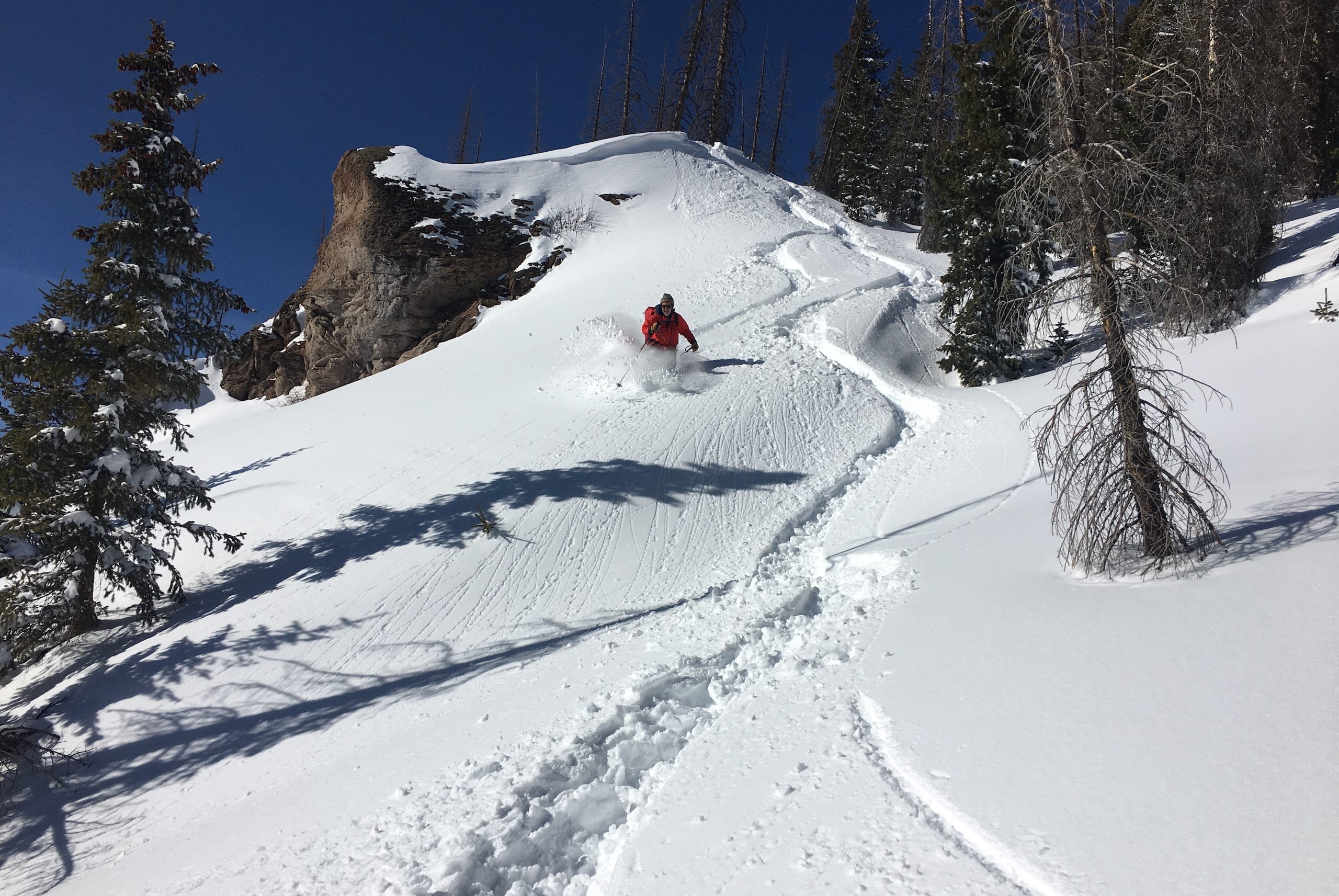
The Rio Grande National Forest is requesting public comment on its Draft Over-Snow Travel Management Plan. The final plan will manage winter access to groomed trails and open areas for snowmobiles and timber sleds, while considering quiet recreation like backcountry skiing, resources like the Continental Divide Trail, and important wildlife habitat for Canada lynx and elk.
When the Forest Service first began this planning process in 2024, many of you submitted comments, attended public meetings, and shared your experiences with the Forest Service. Those voices helped highlight the importance of protecting human-powered recreation opportunities, minimizing impacts to wildlife and natural resources, and ensuring that winter travel management reflects the diverse ways people enjoy the forest.
What's Included in the Draft Plan:
The Draft EIS evaluates four different alternatives for winter travel across 1.8 million acres of the Rio Grande National Forest.
The plan would transition to a “closed unless designated open” system, where routes and areas for motorized over-snow vehicle use are clearly identified on an Over-Snow Vehicle Use Map (OSVUM), and would put the Rio Grande National Forest into compliance with the 2015 Travel Management Rule.
Each alternative takes a different approach to balancing winter recreation, wintering wildlife, and natural resource protection.
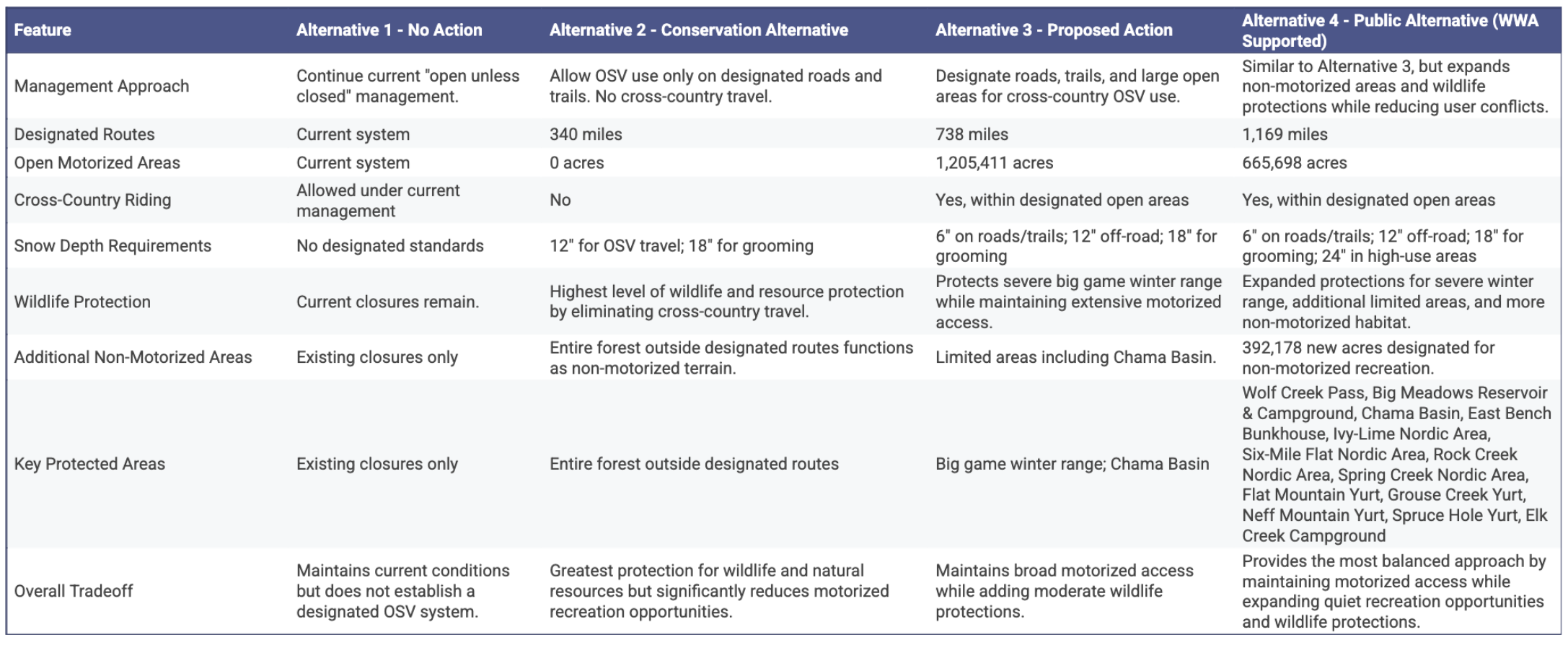
What You Can Do
Submit a comprehensive comment here drawing on your own experiences recreating in the Rio Grande National Forest. If you need some guidance on what makes an impactful comment, please see below. Also, don’t hesitate to reach out to us with any questions you may have! A strong comment goes a long way.
THE TOP LINE ASK:
Submit your comment on the Rio Grande National Forest's Draft Winter Travel Plan to help decide winter access for snowmobiles, quiet recreation, the Continental Divide Trail, and lynx/elk habitat.
Additional Talking Points:
- Compliance with the OSV Rule: We appreciate the Forest Service’s efforts to bring the Rio Grande National Forest into compliance with the Over-Snow Vehicle Rule through Alternative 4. To further strengthen the plan, the Forest Service should include a more robust analysis of noise impacts to wildlife, quiet recreation, and recreation conflicts as part of the Rule’s minimization criteria.
- Minimizing Conflict: Alternative 4 expands protections for many popular Nordic ski areas, backcountry yurts, and quiet-use recreation areas. We encourage the Forest Service to continue minimizing conflicts by protecting high-value non-motorized recreation areas, including the Continental Divide National Scenic Trail, and ensuring adequate separation between motorized and non-motorized recreation where conflicts are most likely to occur. Further site-specific analysis would adequately ensure
- Minimum Snow Depth: We support Alternative 4’s enhanced snow depth requirements, including additional protections for high-use areas. The Forest Service should retain these standards and clearly explain how snow depth will be monitored and communicated to the public before areas are opened for use.
- Develop a Clear Implementation & Adaptive Management Strategy: A successful winter travel plan depends on more than maps. The final decision should describe how the Forest Service will implement, monitor, educate, and enforce the designated system through signage, public outreach, snow depth monitoring, adaptive management, and enforcement.
Why Your Comment Matters
Strong, specific comments are crucial in informing the agency on community preferences for this plan. Without public comment, key conflict areas might not be considered when designating OSV areas. Local perspectives offer important insights into how this land will be managed.
This is also the first Winter Travel Plan under the Travel Management Rule in Colorado, and will likely serve as a framework for future forests. The San Juan National Forest is watching… and we all know how busy 550 gets during peak winter season. This is a chance to set a strong precedent for Colorado’s forests in the winter.
Questions?
Please reach out to John at john@sanjuancitizens.org.