TAKE ACTION: Support Local Solar in La Plata County
The comment window for this action alert has closed.
Thanks for your interest! To stay involved and receive updates, please sign up for our emails.
Encourage our Board of County Commissioners to end the Solar Battery Moratorium.
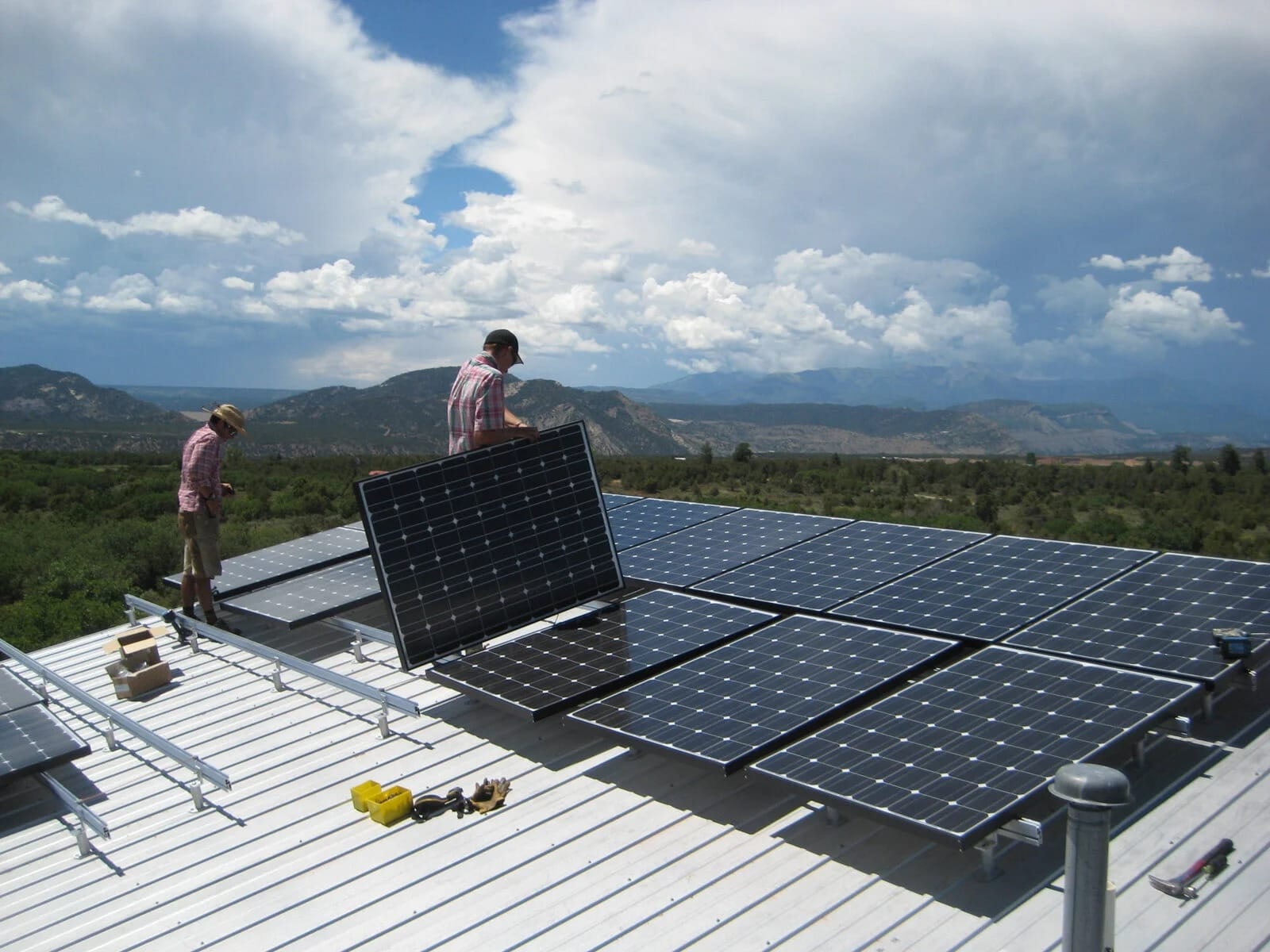
We have the opportunity to harness local, clean energy by unlocking the full value of rooftop solar.
Background:
Batteries are the key to unlocking the full value of local rooftop solar. Right now, La Plata County’s moratorium on anything larger than individual home-scale batteries—combined with LPEA’s red-zoned neighborhoods that prohibit new rooftop solar because the grid is already saturated—means we are wasting clean energy we could be using locally.
Without storage, excess solar produced during the day has nowhere to go, forcing utilities to curtail generation and leaving homeowners unable to install more rooftop systems. Community-scale batteries solve this problem: they absorb surplus solar when the sun is shining and release it when energy is needed, supporting entire neighborhoods rather than placing the financial burden on individual households. By allowing larger batteries, the county can relieve grid constraints, reduce waste, and empower more residents to generate and use local, affordable, renewable energy.
What You Can Do
Encourage the La Plata Board of County Commissioners to end the moratorium!
Submit a public comment HERE using the talking points below BEFORE 1/20, the sooner the better. Please cite the project number as: PL20250124.
THE TOP LINE ASK:
La Plata Board of County Commissioners should end the solar battery moratorium and adopt the latest proposed regulations that have a site-specific approach and reduced setbacks.
Additional Talking Points:
Why We Need Batteries & Why the Moratorium Is Harmful
- La Plata County must end the solar battery moratorium because it is directly limiting our community’s ability to benefit from locally produced clean energy.
- Without batteries, excess rooftop solar has nowhere to go—meaning clean, affordable energy is wasted and homeowners are being turned away from installing new systems.
- This restricts local economic growth, undermines energy affordability, and slows progress toward community resilience and greenhouse gas reductions.
- Batteries are the missing infrastructure that allow rooftop solar to grow and function reliably; the longer the moratorium remains, the more we lose out on local clean energy, local jobs, and long-term savings for ratepayers.
Why Site-Specific Approval Is the Right Approach
- The Board should adopt the Planning Commission’s recommendation for site-specific approval of battery projects, because it allows the county to tailor requirements to the unique conditions of each location.
- The Planning Commission’s recommendation comprehensively includes analysis of wildfire risk and mitigation, emergency response plans, and requirements for decommissioning.
- A site-specific process provides maximum flexibility, invites meaningful community participation, and ensures the county can incorporate new, safer, and more efficient battery technologies as they rapidly evolve.
- Unlike rigid, one-size-fits-all regulations, site-specific review enables durable, adaptable policy that will remain relevant as battery technologies improve and community needs shift.
Why Lower Setbacks Are Needed
- The original setbacks mirror oil and gas regulations, but batteries and wells pose fundamentally different risks. Oil and gas setbacks are designed to protect neighbors from continuous emissions and pollutants, conditions that do not exist around energy-storage batteries.
- Batteries do not produce ongoing harmful emissions, so applying oil-and-gas-style setbacks does not meaningfully increase public safety and instead restricts where batteries can go, making projects unnecessarily difficult or impossible.
- In some cases, these broad setbacks could prevent the use of newer, fire-safe battery designs that intentionally use more space and distribute units farther apart to improve safety.
Questions?
Please reach out to Emelie at emelie@sanjuancitizens.org.